

Your graphics add a nice touch to my presentations and I recently used them for one of my all-hands meetings. Your toolbox adds professionalism to my slides. Instead of using standard clipart.
Claude Jones, Director of Engineer, @Walmartlabs, USA



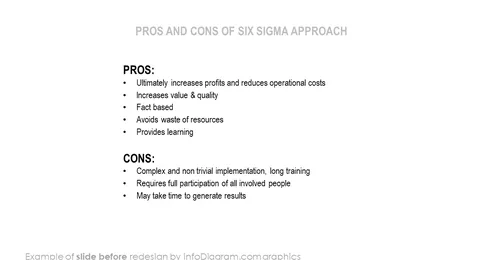
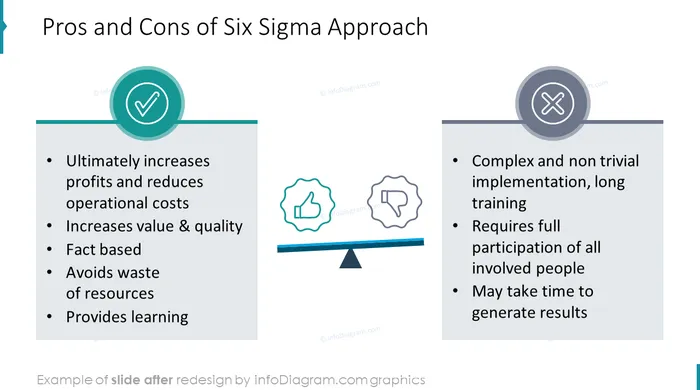
Before and after
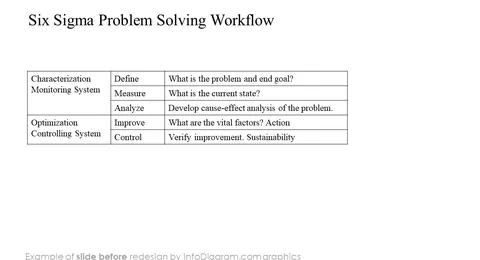
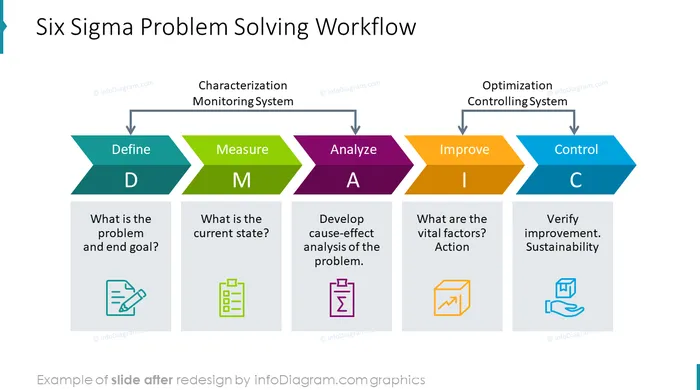
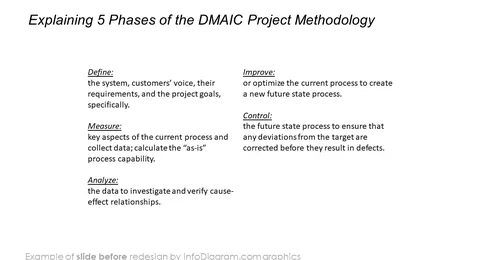
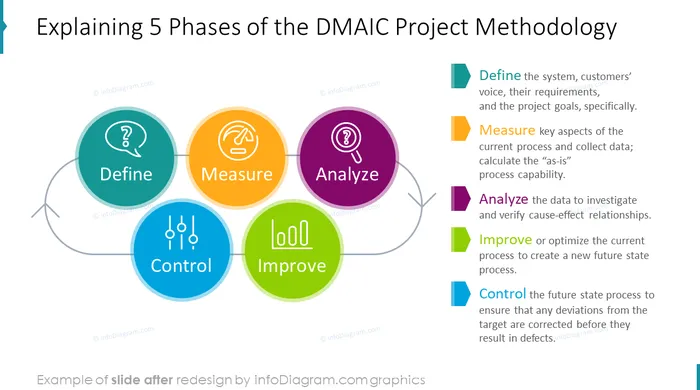
PowerPoint template for Six Sigma training and presentation materials. We designed editable infographics explaining Six Sigma principles, underlying statistical theory and main 6S processes such as DMAIC cycle, DMADV cycle within DFSS, Concept Questions or Lean Problem Solving Workflow. These diagrams can be used to visualize the Six Sigma approach to production or general business processes improvements.
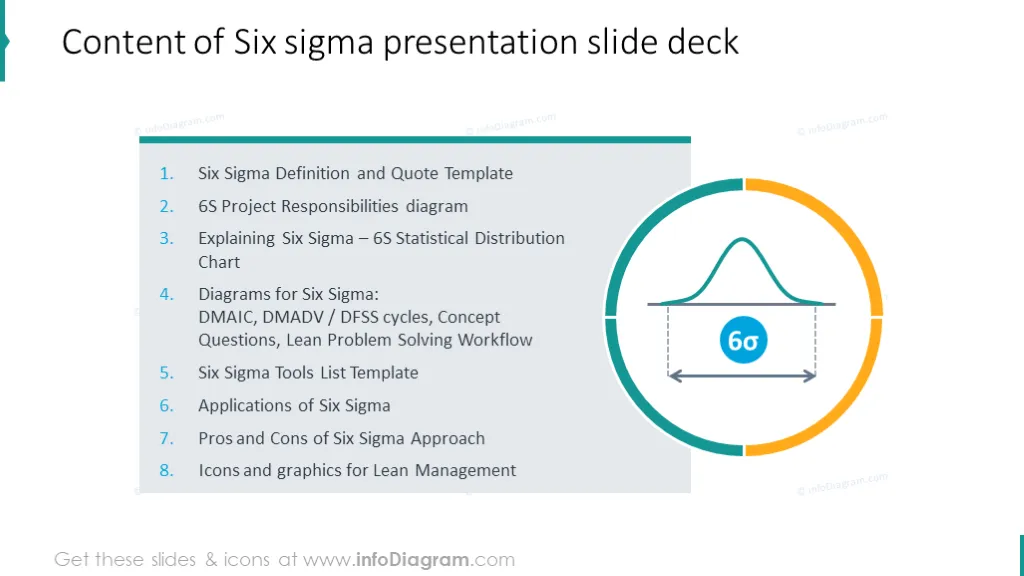
The Six Sigma presentation template deck includes:
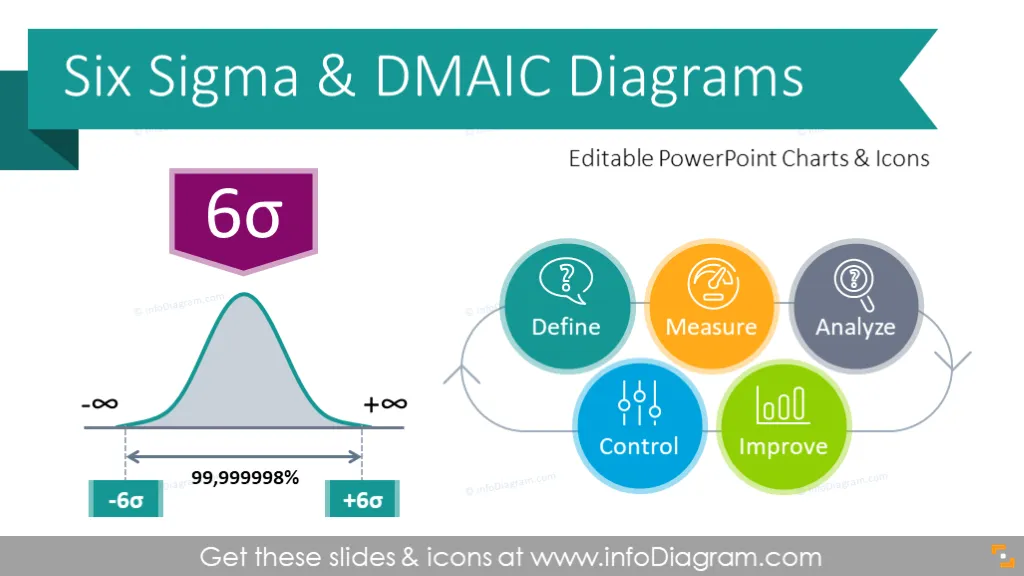
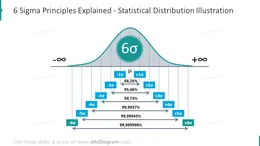
Six Sigma framework was developed by Motorola (Bill Smith and Bob Galvin) in the '80s. The purpose of this Six Sigma approach it to create a system for quality improvement process. The main principle of Six Sigma is to systematically work on decreasing number of defects in the production process, to a level that is statistically insignificant - hence the 6 sigma name. It represents very low probability of event occurrence - under 0,000002% = 100% - 99,999998% the probability of event occurrence. For comparison, one sigma corresponds to defect probability 31,7% - that is almost every 3rd product to have a defect.
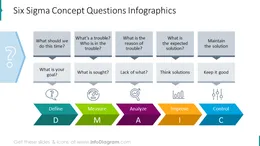
Typical Six Sigma Steps diagram illustrates five stages in this project management framework, often known as DMAIC or DFSS (for design related processes).
DMAIC is the main project approach within Six Sigma methodology representing improvement process cycle. DMAIC is an acronym that stands for Define, Measure, Analyze, Improve and Control. DMAIC cycle is applied to optimize the production of a general business process.
Six Sigma for the case of Design processes (not production improvement) is called DFSS - this acronym stands for Design for Six Sigma. DMADV cycle in Six Sigma is an alteration of DMAIC process, adapted for Design in Six Sigma. DFSS process diagram is composed of Define, Measure, Analyze, Design (instead of Improve) and Verify (instead of Control).
Simply copy one of the diagrams into your presentation, to illustrate it by vivid visuals. You can modify each shape color, add text descriptions or replace symbols.
Using diagrams helps to explain principles of Six Sigma in a modern, clear and eye-catching way.
On last slides, you have a set of icons you can use to extend your slides. You can also expand this symbols collection by getting additional PPT icons (see Related Diagrams section).
Colors of these diagram shapes and icons are fully editable (all graphics is a vector format). So you can change them to colors of your template or company brand.
Six Sigma Presentation contains ready-to-use slides:
Fully editable in PowerPoint set of vector shapes fully editable by using built-in PowerPoint tools, including
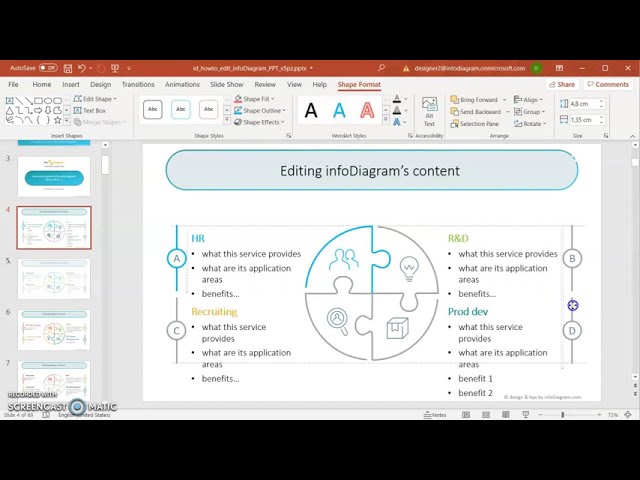
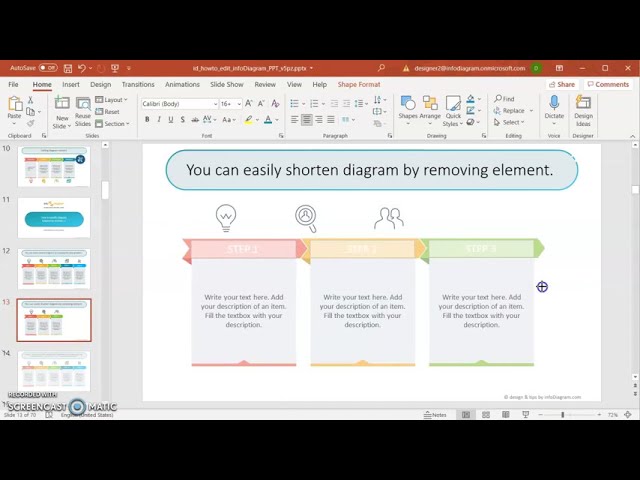
See editing demonstration in our HowTo Videos.
Your graphics add a nice touch to my presentations and I recently used them for one of my all-hands meetings. Your toolbox adds professionalism to my slides. Instead of using standard clipart.
Claude Jones, Director of Engineer, @Walmartlabs, USA
I needed a fresh look at some of my slides. I've tried to find a way to create a paintbrush effect, to underline, accentuate, add some color and the handwritten markers were just the things. Very easy to use, easy to size, change the color. It was an affordable, perfect solution and I'm happy to recommend it.
Anonymous, US
The crisp, clean look of the graphics, and the fact that it allowed me to easily edit and change the colors to match the template was my main reason for purchasing them.
Brandie Jenkins, E-learning Developer, USA
You may also need