Your graphics add a nice touch to my presentations and I recently used them for one of my all-hands meetings. Your toolbox adds professionalism to my slides. Instead of using standard clipart.
Claude Jones, Director of Engineer, @Walmartlabs, USA
Your graphics add a nice touch to my presentations and I recently used them for one of my all-hands meetings. Your toolbox adds professionalism to my slides. Instead of using standard clipart.
Claude Jones, Director of Engineer, @Walmartlabs, USA
I needed a fresh look at some of my slides. I've tried to find a way to create a paintbrush effect, to underline, accentuate, add some color and the handwritten markers were just the things. Very easy to use, easy to size, change the color. It was an affordable, perfect solution and I'm happy to recommend it.
Anonymous, US
The crisp, clean look of the graphics, and the fact that it allowed me to easily edit and change the colors to match the template was my main reason for purchasing them.
Brandie Jenkins, E-learning Developer, USA
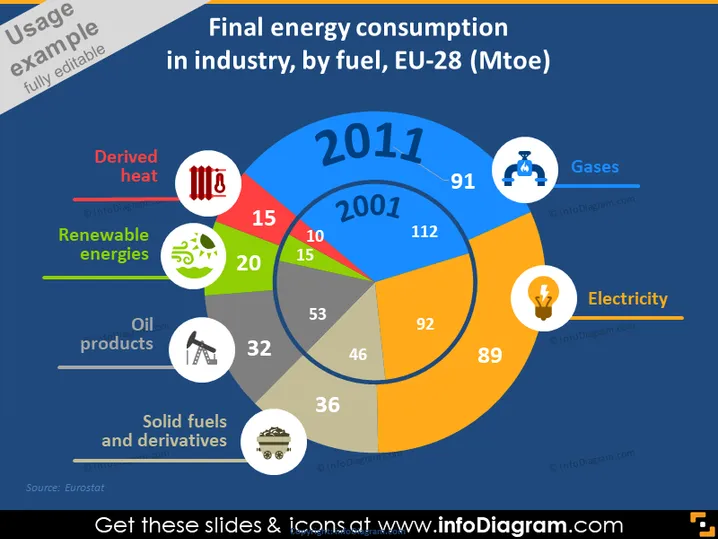
The slide presents data on the final energy consumption in the industry sector by different types of fuel within the EU-28 countries, measured in million tonnes of oil equivalent (Mtoe) for the year 2011. It shows that the highest consumption is from gases (91 Mtoe), followed by electricity (89 Mtoe), oil products (53 Mtoe), solid fuels and derivatives (36 Mtoe), renewable energies (20 Mtoe), and derived heat (15 Mtoe). Each energy type is crucial for understanding industry behavior; for example, the reliance on gases indicates significant natural gas usage in the industry.
The slide has a bold and colorful design with a clear emphasis on the data presented. The use of icons and color-coding makes the information easily digestible at a glance.
Presenting energy consumption statistics in a business report on industry practices within the EU.
Comparing fuel sources during a conference on energy efficiency and sustainability in industrial applications.
Use Cases (continued)
Illustrating data trends in energy consumption during an educational session for environmental studies or economics students.
Utilizing in a policy discussion regarding legislation on industrial energy use and reduction of carbon footprint.