
Your graphics add a nice touch to my presentations and I recently used them for one of my all-hands meetings. Your toolbox adds professionalism to my slides. Instead of using standard clipart.
Claude Jones, Director of Engineer, @Walmartlabs, USA

Your graphics add a nice touch to my presentations and I recently used them for one of my all-hands meetings. Your toolbox adds professionalism to my slides. Instead of using standard clipart.
Claude Jones, Director of Engineer, @Walmartlabs, USA
I needed a fresh look at some of my slides. I've tried to find a way to create a paintbrush effect, to underline, accentuate, add some color and the handwritten markers were just the things. Very easy to use, easy to size, change the color. It was an affordable, perfect solution and I'm happy to recommend it.
Anonymous, US
The crisp, clean look of the graphics, and the fact that it allowed me to easily edit and change the colors to match the template was my main reason for purchasing them.
Brandie Jenkins, E-learning Developer, USA
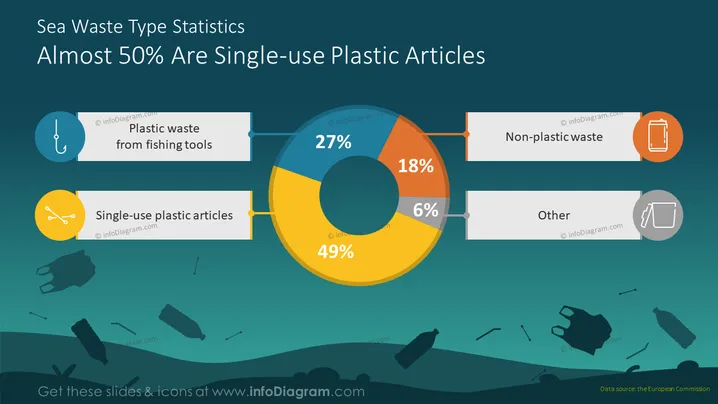
The PowerPoint slide provides statistics on the composition of sea waste, emphasizing the prevalence of single-use plastic items. A pie chart shows that 49% of sea waste is made up of single-use plastic articles, 27% is other plastic waste from fishing tools, 18% is non-plastic waste, and 6% is categorized as other types of waste. This data highlights the significant environmental challenge posed by plastic pollution, particularly from single-use items that end up in the oceans.
The slide's design is visually engaging, with a clear focus on communicating the types of waste found in the sea. The use of icons and a complementary color palette enhances the readability and impact of the information presented.