
Your graphics add a nice touch to my presentations and I recently used them for one of my all-hands meetings. Your toolbox adds professionalism to my slides. Instead of using standard clipart.
Claude Jones, Director of Engineer, @Walmartlabs, USA

Your graphics add a nice touch to my presentations and I recently used them for one of my all-hands meetings. Your toolbox adds professionalism to my slides. Instead of using standard clipart.
Claude Jones, Director of Engineer, @Walmartlabs, USA
I needed a fresh look at some of my slides. I've tried to find a way to create a paintbrush effect, to underline, accentuate, add some color and the handwritten markers were just the things. Very easy to use, easy to size, change the color. It was an affordable, perfect solution and I'm happy to recommend it.
Anonymous, US
The crisp, clean look of the graphics, and the fact that it allowed me to easily edit and change the colors to match the template was my main reason for purchasing them.
Brandie Jenkins, E-learning Developer, USA
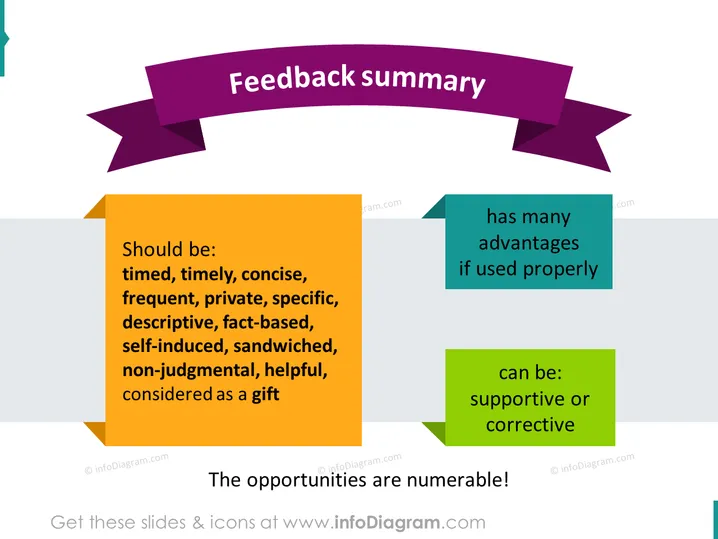
Esta diapositiva proporciona un resumen de cómo se debe abordar el feedback. Afirma que el feedback debe ser "oportuno, puntual, conciso, frecuente, privado, específico, descriptivo, basado en hechos, autoinducido, en sándwich, no crítico, útil," y "considerado como un regalo." Cada uno de estos adjetivos presenta una característica ideal del feedback: "oportuno" y "puntual" se refieren a la programación adecuada de las sesiones de feedback, "conciso" sugiere mantener el feedback directo y al grano, "frecuente" implica intervalos regulares para proporcionar feedback, y así sucesivamente. La diapositiva también destaca que el feedback tiene muchas ventajas si se usa correctamente y puede ser de apoyo o correctivo, enfatizando el papel multifacético que el feedback puede desempeñar en diferentes contextos.